
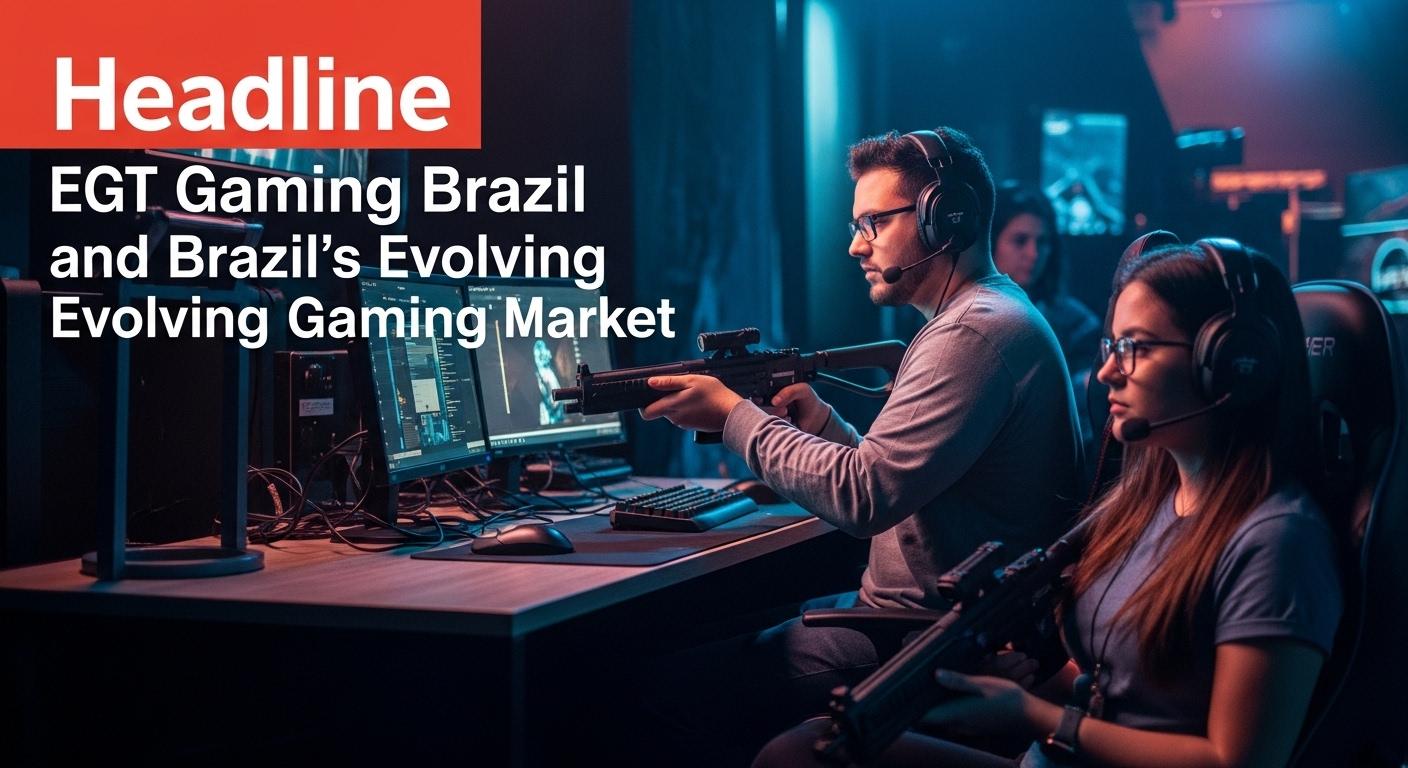
egt Gaming Brazil stands at the crossroads of Brazil’s burgeoning gaming economy, where consumer appetite for mobile, social, and regulated play collides with a patchwork of rules that can shift with the political wind. This analysis examines how egt Gaming Brazil positions itself within a market that is simultaneously hungry for innovation and cautious about compliance. The global gaming industry is watching Brazil’s trajectory because the decisions made here over the next two years could redefine regional strategies for developers, platform operators, and retail partners. For operators trying to scale in a country with a large, youthful audience, the question is not only what product to offer but how to localize it—how to translate technical solutions into a Brazilian reality where payments habits, tax regimes, and consumer expectations diverge from mature markets. The path forward will depend on a careful blend of product localization, partnerships with trusted local brands, and an understanding of how regulatory signals are likely to evolve in a landscape that remains under intense political and economic review.
Market dynamics and local adaptation
Brazil’s gaming market is characterized by rapid user growth, a mobile-first user base, and a growing appetite for regulated options. Operators are learning that success rests on local expertise—not just translating interfaces, but tailoring payment rails, customer support, and risk controls to Brazilian realities. In this environment, global platforms that lean into modular architecture and regional partnerships tend to outpace rigid, one-size-fits-all solutions. The narrative is not merely about product features; it is about how developers and operators demonstrate reliability, compliance, and cultural relevance in tandem. Brazil’s ecosystem rewards the ability to align product depth with practical deployment, such as localizing payment methods, offering Portuguese-language support with nuanced regional slang, and integrating tax-deductible practices into user journeys. This need for adaptation is echoed in industry commentary that describes the market as complex and dynamic, where local adaptation is essential for achieving scalable, long-term growth. As egt Gaming Brazil maps its portfolio to these realities, the emphasis shifts from merely acquiring users to cultivating a compliant, trusted relationship with the regulatory environment and with Brazilian players who demand consistent quality and clarity in terms of service.
Regulatory and fiscal frames shaping operator strategies
The fiscal and regulatory backdrop in Brazil remains a central driver of corporate strategy. Industry observers point to a market where clear regulatory signals can unlock capital planning and product roadmaps, while ambiguity can compress margins and slow rollout. Recent reporting from iGaming news outlets highlights a notable financial channel: January tax revenue generated by Brazilian operators reached USD 291.1 million, underscoring the scale of the informal-to-formal transition underway in the sector. This metric matters because it signals both market size and the cost of compliance for operators seeking sustainable growth. Companies eyeing Brazil must therefore invest in compliance infrastructure, tax-efficient structuring, and transparent consumer protections. The path forward depends on regulatory clarity around online gaming and sports betting, the codification of licensing processes, and predictable tax regimes that incentivize investment in Brazil’s digital economy. In this context, egt Gaming Brazil’s approach—prioritizing modular, compliant platforms and local partnerships—appears aligned with the industry’s expectation that a mature Brazilian market will reward operators who can responsibly scale with regulatory confidence.
Strategic moves and partnerships in a Brazilian context
Market entrants and incumbents alike increasingly view partnerships as the quickest route to local legitimacy. A recent industry development highlighted by ThrillTech’s entry into the Brazilian market alongside EstrelaBet illustrates a broader strategic trend: local brand synergy can accelerate user trust, improve payment integration, and streamline distribution. For operators, collaborations with Brazilian platforms mean better alignment with consumer payment preferences, regional marketing strategies, and shared compliance capabilities. Egt Gaming Brazil, in turn, appears to emphasize adaptability—deploying flexible product stacks that can be localized for different Brazilian segments, while leveraging channel partners to navigate region-specific regulatory and tax considerations. The result is not a single product but a coordinated ecosystem where technology, local market insight, and governance converge to support sustainable growth in a challenging regulatory climate. The Brazilian scene, therefore, rewards operators who can balance innovation with pragmatic risk management and who can translate global capabilities into locally trusted experiences.
Future scenarios and risks for egt Gaming Brazil
Looking ahead, two broad scenario paths emerge. In the optimistic scenario, regulatory clarity advances, licensing processes become more predictable, and tax regimes incentivize investment in local infrastructure—cloud services, payment gateways, and customer support centers—leading to faster penetration and improved lifetime value per user. In a more cautious scenario, continued regulatory ambiguity or abrupt policy shifts could compress margins, slow distribution, and necessitate frequent platform adjustments. Against this backdrop, egt Gaming Brazil must maintain a dual focus: strengthen compliance-led product design to withstand regulatory scrutiny, and deepen local partnerships to ensure timely market access and consumer trust. Another risk vector is macroeconomic volatility, which can influence player spending and cross-border payment flows; a resilient strategy will require diversified monetization, cost discipline, and robust local market intelligence. Ultimately, the market’s evolution will hinge on a combination of clear policy signals and staged investments that translate Brazil’s demographic opportunity into durable, regulated growth for platform operators and developers alike.
Actionable Takeaways
- Prioritize local product localization: translations, payment options, and customer support tailored to Brazilian players.
- Invest in regulatory compliance infrastructure: licensing, AML/KYC controls, and transparent consumer protections to reduce risk and improve trust.
- Forge strategic partnerships with Brazilian brands and payments ecosystems to accelerate market access and acceptance.
- Monitor regulatory signals closely and prepare flexible product roadmaps that can adapt to policy changes without major reengineering.
- Balance growth with profitability by diversifying monetization streams and optimizing cost structure in the Brazilian operation.



Deixe um comentário